
Dynamic Approaches to Accelerating Climate Resiliency
The Eco-Cultural Labs are multi-day sessions, accompanied by three initiatives that aim to provide intersectional approaches to sustainable development goals that are regionally specific and responsive to the concerns and needs of those who live in the community.
The labs will be a socio-culturally unifying space for safety and stability to ensure communities are prepared to face the next climate emergency and to increase capacity for sustainable infrastructure and renewable energy skills, and affordable energy solutions, to build on community climate resilience.
The Eco-Cultural Labs are deeply rooted in community-led energy transition and climate adaptation and mitigation solutions.
Nothing about us, without us

1
Sustainable Development Goals with Socio-Cultural Intelligence
Eco-Cultural Labs advances the Sustainable Development Goals by grounding global priorities in local knowledge, lived experience, and socio-cultural intelligence. Sustainability is approached as a community-led process shaped by culture, trust, and social relationships rather than purely technical solutions. This work centers Indigenous and place-based knowledge, and the realities of rural, coastal, and marginalized communities often excluded from decision-making.
2
Mutual Aid Mapping and Climate Preparedness
Mutual aid mapping focuses on understanding how people already support one another before, during, and after periods of disruption. By identifying existing care networks, shared resources, accessibility needs, and trusted community connectors, this work strengthens preparedness in ways that feel practical and human. Through participatory research and storytelling, preparedness becomes a shared responsibility rather than an individual burden. This approach reduces isolation, supports collective safety, and ensures that responses are locally informed, culturally aware, and flexible enough to adapt as conditions change.
3
Rain Garden Installation and Maintenance Training
Training focuses on site assessment, soil preparation, plant selection, and long-term care, while emphasizing local conditions and existing land use. Participants learn how rain gardens can reduce surface flooding, protect nearby waterways, and enhance shared green spaces. This work prioritizes hands-on learning and knowledge sharing. By building local skills and stewardship, rain gardens become a community asset rather than a one-time project.
4
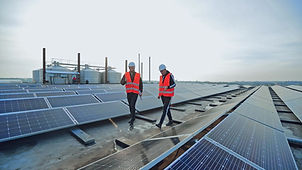
Solar Panel Installation and Maintenance Training
This training is delivered through a sliding scale, multi-day or multi-week process, and by an experienced local trainer, focusing on building job-ready skills within the community. Participants gain hands-on experience in solar installation, safety, and maintenance, supporting local employment, long-term system care, and community ownership of energy infrastructure.
Click below for more information and get in touch with one of our consults today.
Sliding scale available for historically marginalized communities.